
An ecovillage represents either a customary or deliberately formed community aiming for advancements in social, cultural, economic, and ecological sustainability. The primary goal of an ecovillage is to minimize its negative influence on the natural surroundings, achieved through thoughtful design and the lifestyle choices of its inhabitants.
Such communities are designed with a strong emphasis on local ownership and participatory methods, aiming to rejuvenate both its social and ecological surroundings. Typically, they house 50 to 250 people, but sizes can vary, with some being more extensive and functioning as a network of smaller communities. Growth in some ecovillages is seen when like-minded groups or individuals decide to join, often beginning as non-members. Currently, the world houses over 10,000 such communities.
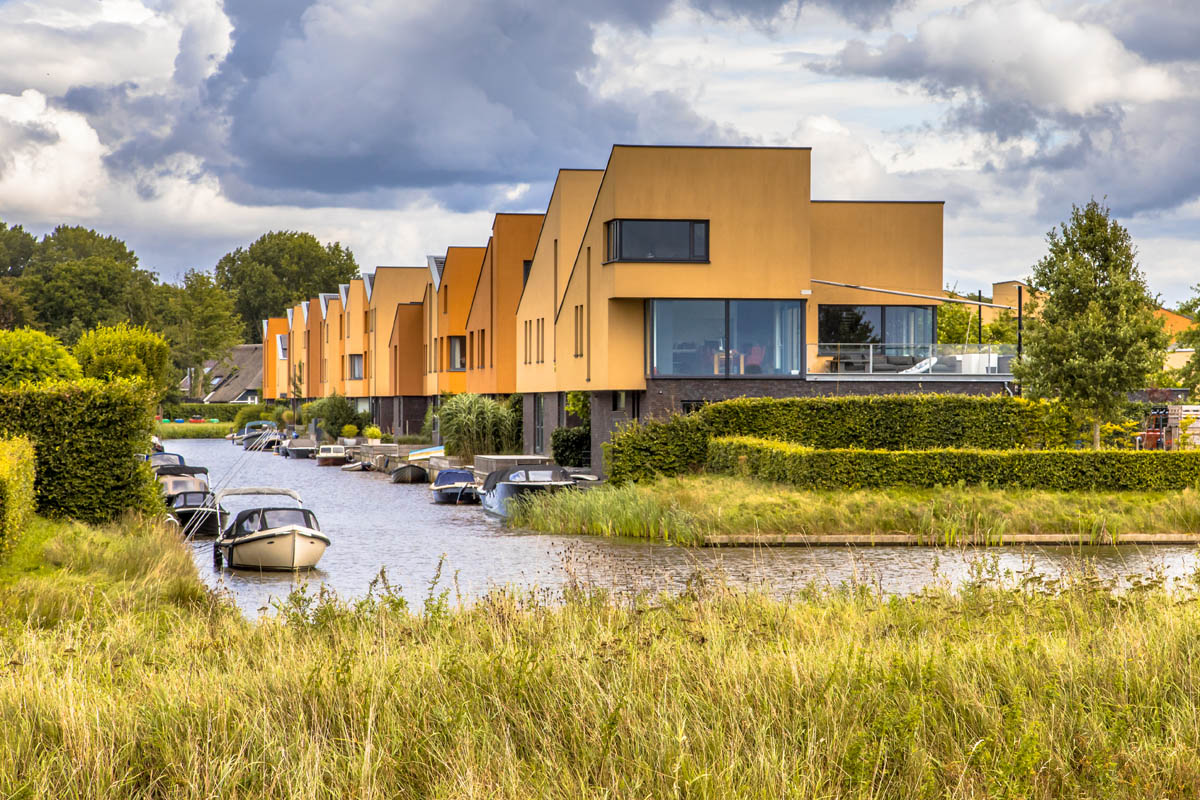
Inhabitants of ecovillages are bound by common goals that emphasize ecological, socio-economic, and cultural values. Practically speaking, they look for sustainable alternatives to current damaging practices related to electricity, water, transport, and waste. Many recognize the issues of modern community disintegration, excessive consumerism, habitat destruction, urban expansion, industrial agriculture, and fossil fuel dependence as critical challenges that need rethinking for a sustainable future.
Ecovillages present a vision of small communities that function with a low or positive ecological footprint. Yet, they often collaborate with similar communities, forming networks, as evidenced by the Global Ecovillage Network (GEN). This collaborative approach mirrors the strategy of Ten Thousand Villages, promoting globally fair trade practices.
Origins
The contemporary yearning for communal living traces its roots back to the "return to nature" movement that marked the 1960s and 1970s, evident in communities like the enduring Miccosukee Land Co-op, initiated in May 1973 by James Clement van Pelt in Tallahassee, Florida. Around the same era, recurrent energy challenges highlighted the urgency to rethink excessively wasteful energy consumption habits, especially the widespread use of cars in suburban areas. The phrase "eco-village" was coined by Georgia Tech academic, George Ramsey, during his 1978 presentation titled "Passive Energy Designs for Urban Infrastructure" at the inaugural World Energy Symposium held by the Association of Energy Pioneers. He emphasized eco-friendly, small-scale residential areas that promoted walking and minimized car use, pointing out that the primary energy inefficiency in the US stemmed not from technology but rather from the prevailing lifestyle. A drawing of a "pedestrian-friendly self-reliant solar community" in Ramsey's paper bears a striking resemblance to present-day eco-villages.

The idea gained momentum and structure with the emergence of the cohousing concept and similar community-centric ideologies in the mid-1980s. This trend was solidified in 1991 when Robert Gilman and Diane Gilman combined environmental and community-driven ideals in their pioneering report "Ecovillages: Pathways to Sustainable Living" commissioned by Gaia Trust.
The pioneering Eco-Village in North America took its initial steps in 1990. Situated in Black Mountain, NC, Earthaven Eco-Village became the premiere community to adopt the term 'Eco-Village' and was conceived based on integrated permaculture design. The first settlers claimed their plots in 1993, and by 2019, Earthaven Eco-Village boasted over 70 households, all residing off-grid within its 368-acre territory.
The ecovillage initiative gained significant momentum during the 1995 annual autumn gathering at Findhorn in Scotland. Named "Ecovillages and Sustainable Habitats", the event's popularity was evident when numerous enthusiastic participants were turned away. As Ross Jackson highlighted, the topic had tapped into a universal sentiment. The term 'ecovillage' thus seeped into the lexicon of visionary thinkers. Subsequent to this event, various intentional societies, Findhorn included, embraced the "ecovillage" title, marking the inception of a transformative trend. The inception of the Global Ecovillage Network was an aftermath of this congregation. Originated by around 25 global representatives from the Findhorn gathering, this network unified myriad small-scale, like-minded endeavors worldwide that had previously operated in isolation. Denmark's Gaia Trust pledged support for the network's initial five years. Presently, communities identifying as ecovillages span over 70 nations across all major continents.
Post the landmark 1995 gathering, several early affiliates of the Global Ecovillage Network ventured into innovative ecovillage conceptualizations aiming for wider societal acceptance. Endeavors like Living Villages and The Wintles have achieved notable traction, where eco-residences are designed to optimize social interactions, and communal spaces like food cultivation plots, forests, and shared livestock farming promote enhanced sustainability.

Core Values of Ecovillages
The foundation of ecovillages is built on principles adaptable to both metropolitan areas and countryside, and are relevant in both developing and advanced nations. Proponents advocate for a lifestyle that emphasizes sustainability, often leaning towards voluntary minimalism. The ideal is for residents to rely primarily on local resources, minimizing external trade. While some aspire to be self-reliant and independent of mainstream infrastructures, others in urban environs may opt for a symbiotic relationship with existing facilities. Countryside ecovillages typically prioritize practices like organic agriculture and permaculture, which bolster ecological health and diversity. Regardless of their setting, ecovillages meld community and environmental values, often anchored in sustainability practices such as permaculture principles.
In his 2006 publication, "Ecovillages: New Pathways for Sustainability", Johnathan Dawson, an ex-leader of the Global Ecovillage Network, enumerates five pivotal ecovillage tenets:
1) They emerge from grassroots movements rather than being the outcome of top-down governmental projects.
2) Communal living and its virtues are central to the residents.
3) Rather than relying heavily on centralized systems or corporations for basic needs like water, food, and energy, residents endeavor to be self-sufficient.
4) A profound sense of shared ethos often permeates these communities, frequently with spiritual undertones.
5) They often stand as beacons for sustainable living, imparting knowledge and experiences to external learners.
Environmental Influence
Ecocommunities frequently emerge from a dedication to environmental welfare and a commitment to heightened sustainability. Such communities tend to harness renewable energy sources like solar and wind energy and utilize earthy materials such as clay, timber, and hay for construction purposes. Innovations like climate-responsive farming play a role.
Research conducted on an ecocommunity in Ithaca, New York revealed that the average environmental impact of its inhabitants was 70% lower than that of the majority of Americans.
Community Management
Efficient community management is a cornerstone in ecocommunities. It lays the groundwork for fostering and championing sustainable living patterns. While the pioneers of these communities were inclined to unanimous decision-making as their governance approach, challenges arose with using unanimity as a routine decision-making tool: it's notably time-consuming and often, a handful of steadfast individuals could stall decisions. In recent times, a shift towards sociocratic and other unconventional decision-making approaches has been observed in many ecocommunities.
Furthermore, these communities are in search of diverse governance structures, prioritizing a profound bond with nature over monetary concerns.