
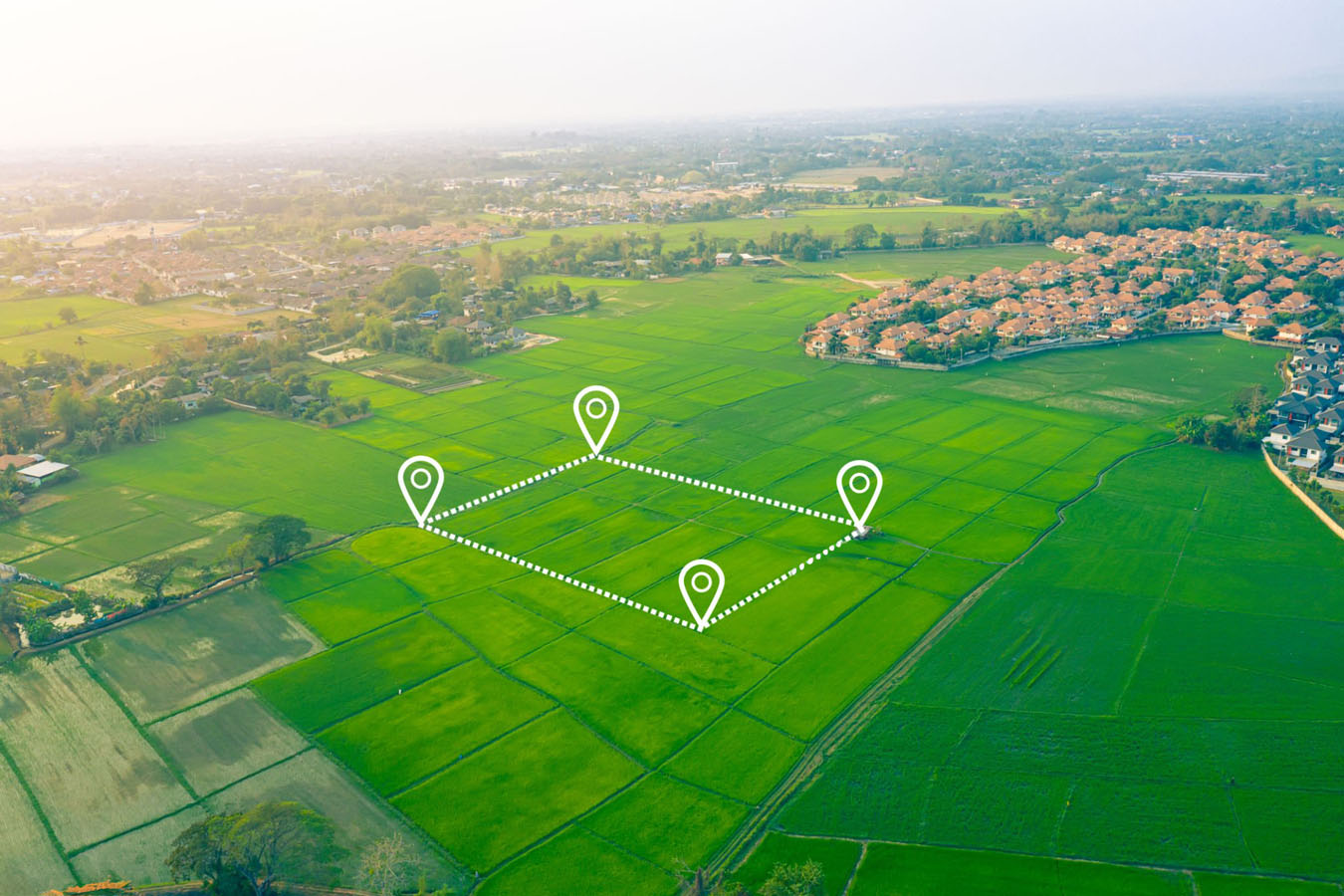
Investing in land can be a highly rewarding venture, but it requires careful consideration of various factors to ensure long-term success. Land, as a finite resource, holds intrinsic value, making it a unique asset for investors. However, selecting the right parcel of land for investment is not a simple task, as it depends on numerous elements such as location, economic trends, environmental factors, and legal constraints. Whether the goal is agricultural development, residential construction, or commercial expansion, conducting thorough due diligence is critical to mitigating risks and maximizing potential returns. This article explores the key factors to consider when selecting land for investment, offering insights into how to make informed and strategic decisions.
1. Understanding the Essentials of Land Investment: A Smart Investor’s Starting Point
Ramping up your early-stage investing in land could be a great plan given where we are in the economic cycle. While investing in land does come with its risks, it also brings its rewards. Land investment is intriguing, both as an asset with intrinsic value and generally low maintenance requirements. There are various types of land investments depending on the purpose of the investment. Maybe it's a plot to build a new home. Maybe it's land that will be converted into commercial centers or farmland intended for agricultural production. One emerging opportunity to think through is land investment as an asset distinction.
As everything accelerates toward technology, trying to fathom the impact of cryptocurrency and urbanization on the value of agricultural land and its use is paramount. But first, a few key factors to consider when selecting land for investment. When making an investment, it’s always best practice to conduct due diligence before putting your capital at risk. This is why the below checklist was put together. Each one of these criteria has a long list of factors that qualify them, and every case is fact-dependent. It would not be feasible to go through all the criteria and their respective qualifications in one essay. Thus, for now, please consider this list of criteria as jumping-off points. Over time, more depth will be added for each one.
Why this checklist? These are the risks that land investors have walked away from the table losing their shirts. Emphasis is placed here on “consider when selecting land for investment” because knowing the intricacies revolving around these topics for a given parcel of land is paramount to understanding the risks associated with it. Doing land investment deals in states or regions you’re not familiar with or don’t have boots on the ground to survey the land and the surrounding parties that affect it could be very risky. Subsequently, businesses or hustles leveraged on investors who take that approach can be very predatory and savvy with how they funnel investors' money into the hands of developers, climbers, and other land investors.

2. Economic Factors
Investing in land is no small feat, and there are so many things to consider to make your investment worthwhile. After you take into account the environmental factors, the next thing you need to check is the economic factors, specifically the market trends, local economy, and infrastructure development. Market trends play a fundamental role in land design. Some commercial investors look for property near retail. On the other side of the spectrum, buyers are also looking for tucked-away lots that can be secluded. The low-cost appeal, however, does not mean the land is without risk. There are huge costs in terms of time, money, and frustration that can come with owning far-flung property. As for farm and ranch investors, they do not look for the same thing as those looking for a park. Understanding the specific need for the land prior to land selection is critical to acquiring the best investment possible. Land buyers outside the metro market need a clear understanding of the local economy and real estate market. With no job growth, there will not be new home construction; therefore, the need for the land will be stifled. For those looking at land for partial residential development, look for slight growth patterns in subdivisions on the periphery of the market. Sizable subdivisions in place, in development, and/or in planning are all positive indicators that the land could also produce similar great returns. Do not look at land with residential zoning in high growth areas of the town, as properties in this situation are usually undesirable, especially for cash sale buyers considering initial pricing packages produced by showing a contingent deal. Infrastructure adds value to land and is a huge determining factor for overall land desirability. It not only includes roads and electricity but also water. So getting back to the earlier discussion of land near bodies of water or farmland, water is key in this industry. The single best investment in land is irrigated farm ground. On the other hand, the worst investment in land is cattle ground that has no water.
2.1. Market Trends
Once you’ve settled on your high-level investment strategy, it’s time to do your homework. Key questions include: What areas are appreciating? What areas are depreciating? In border towns, how do the respective economies affect land values? In remote areas, would it benefit you to invest in options on fenced land that lacks government survey or title? You might want to ask these questions to a former supervising partner who shares your views on land investments or to a trusted friend with an economics or business background.
The smart way to start is to look at how the local economy has changed over the past 30 years. Examine land usage and prices, and look for appreciations and depreciations. Don’t be fooled by the price charts. What does a chart showing a steady appreciation in price really mean? Have you considered average land area transactions? For a 30-acre property purchased at a certain price thirty years ago, a past average appreciation wouldn’t look too good for someone who just bought that same tract at a higher price?
Because wealth begins at home, it’s also important to identify the factors affecting the market for land that you take as your trial area. Is it a dry and scorching area ten kilometers from a river town with drinking water? Did the government establish a dam two kilometers upstream of that town? Would it flood that area? You might want to start by choosing a small province you understand fairly well, or choose an area where there are railroad and port investments underway somewhere, but no appreciation spurred yet. Knowing what people know about the land would protect you from thievery and help you design winning strategies.

2.2. Local Economy
Did you know that a booming local economy can really make or break the land you want to buy? This is something that smart land investors absolutely consider! After all, you want your investment to grow, right? If the economy is in good shape and growing, people are coming in, jobs are being created, businesses are expanding, and property values go up. And when the economy shrinks, people leave, businesses close down, jobs disappear, and property values drop. In short, you want to know all about the local economy!
So, where do you go to do your research? It turns out, local chambers of commerce often keep records of their communities, the businesses that have come, and the businesses that have gone. There’s even an economic development officer who can help you here! Sounds simple, right? But it gets even better: real estate companies often have departments that do nothing but read these reports and use that information to help themselves and their clients buy and sell land. How cool is that?
Okay, suppose the economy in the area where you want to invest is in good shape. What’s next? Has the area just started to grow, or has it been growing for some time? Did a major employer come or expand into the area? Land values may be very cheap now, but they could go up quickly as things settle down if this is the case. On the other hand, an area could be devastated by the loss of a major industry. In this case, land values are likely to fall even more. So, it’s important to know how long the area has or hasn’t grown, as well as the reason for it.
It may turn out that the area is growing, or just started to grow, but for the wrong reason. A small army post came in and is expanding. Land values are going to go up as people and businesses come in to support the army. But what happens if they decide to downsize? The item that everyone wanted to happen, to invest in the growing local economy, may also be the reason that it shrinks! That's why you can never just take the information you find at face value and trust it completely. You must verify and, if necessary, dig even deeper!
2.3. Infrastructure Development
Infrastructure development is another key aspect that needs to be considered when investing in land. The future development of the area depends on current infrastructure. New, upgraded, or improved access routes, utilities, and services increase accessibility and can generally raise the price of land. In areas with planned upgrades, the equity lift from this infrastructure can approach a 100% improvement in cost or viability, which is an impressive gain. Markets expect land values to rise in these situations long before the enhancements take effect. Future investigations the likelihood of urban or corporate sprawl occurring because of proposed infrastructure.
At a local level, it is also worth considering what immediate infrastructure is available. If parcels of land being considered by an investor would make a lot more sense to develop together with the surrounding area, this is a consideration. Additionally, examination of present-day infrastructure such as roads and hydrology is also important. Particular combinations of services or unusual competing conditions may exclude a property from industrial investment opportunities, for example.
To delve further into infrastructure consideration, it is necessary to ask questions about what situation would be ideal in the future for investment land. Locations next to schools, shops, public buildings, or parks are considered most desirable in some cities. In contrast, places adjacent to low-income estates or found on the outskirts of towns would be undesirable. In some cases, completely free land in the middle of nowhere may be preferable to buying a house in the middle of an area that might suffer demolition or gentrification later.
Scenarios played out in terms of what might happen in the next five, ten, twenty, and fifty years allow consideration of longer-term investment. Projections on higher-order infrastructure developments taking place are significant as well, as changes in services and economic ties change the relative importance of pieces of land. This reveals how positions and situations can evolve and what developments are likely to make them obsolete. Additionally, questions regarding how firmly policies delineate areas to be left for economic use speak to infrastructure development, as it questions the granularity of prospective change.

3. Legal and Regulatory Considerations
Legal and regulatory issues can be the biggest hurdles to land acquisition and investment, though they are often ignored or treated as an afterthought. If a land investment is improperly zoned, or if it is affected by protective easements or environmental regulations, it could be rendered worthless. For this reason, zoning and other legal issues should be carefully reviewed and considered before any land is acquired. Zoning is the control of land use density and types of uses within a certain publicly defined area. For example, a tract of land may be zoned exclusively for residential use while another tract located nearby may be zoned for commercial use. Each community typically has its own zoning regulations and zoning maps to guide and control land use throughout its jurisdiction. There may also be regulations regarding the height of buildings, setbacks from property lines and streets, density of dwelling units, and off-street parking, to mention but a few. It is absolutely vital to know how a property is zoned before acquiring it. If the property is zoned absolutely against a certain use or investment, it will be impossible to convert it to the intended use, and any development will most likely be permanently restricted. Even if the property can be changed to the desired zoning, the costs and time delays involved in such a process may be prohibitive. The most prudent approach is to avoid any land investment situation where the property is not already properly zoned. After examining the zoning status of a piece of land investment, it is critical to evaluate any other land use control laws that may either restrict or completely void the intended plans for a tract. This includes studying any land use restrictions in deeds and protective easements that may affect the property. Protective easements are commonly used by property owners to control what future current and prospective owners can do with land. Environmental restrictions are also critical issues that should be considered. The widest application of environmental law pertains to wetlands. Prior to acquiring commercial land investment, it is advisable to have a wetlands survey conducted on the property. Finally, any restrictive covenants on the deed should be uncovered. These are conditions that have been placed on properties by the original grantor for the benefit of the grantor or other properties controlled by the grantor.
3.1. Zoning Regulations
Before setting your sights on a parcel of land, it’s a good idea to investigate zoning regulations. These laws govern a broad array of issues related to land usage, including building height, setbacks from property lines and roads, lot size, floor area ratio, building materials, dwelling unit density, onsite parking space, green space, aesthetic appearance, and the types of buildings or businesses allowed. Zoning can also affect issues not directly related to the buildings, such as noise, vibration, and traffic generation.
Once you’ve determined an area where you’d like to locate, it’s wise to investigate whether its current zoning designation permits the sort of use you’re considering. You can usually access this information through the planning department of the local municipality. Zoning ordinances also restrict certain types of land use through special use or variance permits. If you can’t live with the limitations of a particular land designation, it may be possible to request a change in the designation. However, rezonings can take time and may not be granted.
You should also look at a map to see what surrounding uses exist and how they might affect your plans. For example, purchasing land next to warehouses or factories that operate late at night might frustrate efforts to establish residences. Areas may be designated for large-scale commercial or industrial development, redevelopment, or low-income housing. Simply zoning an area commercial won’t ensure that commercial buildings will be constructed. Zoning ordinances often stipulate both uses and the intended character of the use. In some areas, there are zoning designations for industrial uses that operate entirely indoors only, as opposed to uses like junkyards or oil refineries that may have unsightly or hazardous outdoor operations.
Planning departments also typically keep statistics on anticipated future growth, population movements, and major road improvements. This data can be helpful in determining whether a particular area is likely to thrive or decline in the future. In determining an acceptable location, it’s a good idea to budget time to receive local approval for a change in zoning.
3.2. Land Use Restrictions
Land use restrictions often apply as part of the zoning ordinance. They specify how land may be used (for example, non-residential uses only, or only uses encountered in a particular neighborhood). In the agreement with the land use restrictions, the investor will acquire land for certain land use purposes. The restrictions will run with the land in question and be included in the deed by the seller. A careful investigation should be made to uncover and assess such restrictions as part of the land purchase investigation.
A builder may seek to construct a shopping center on a desired piece of property. The center is likely to be restricted from construction by the underlying zoning designation. In attempting to locate a suitable site, the builder may subsequently narrow prospective properties, known as "candidate sites." The builder would then conduct a preliminary title investigation on each candidate site to assess whether ownership is clear and whether any specific land use restrictions would prevent construction of the shopping center.
Land planning typically involves assembling the land uses sought for development. Candidate sites that comply with underlying zoning and are suitable for the scale of development contemplated would be assembled, and zoning change petitions, if any, would be filed. In addition, any designations ensuring the preservation of priority farmland in the community entailing right-to-farm provisions would also be ascertained and abided by. The Board of Adjustment or municipality would be consulted to address any potential land use conflicts. This would assuage concern that the construction of the shopping center may adversely affect any neighborhood, likely increasing traffic activity and modifying the surrounding land uses. Instead, the investigation would assist in uncovering any non-compliance with land use restrictions across all candidate sites. Compliance would engender greater assurance that the investment would be financially successful and mitigate the potential for being turned down by the officers of proper municipal or county government agencies.
3.3. Environmental Regulations
Environmental regulations are laws and rules that govern how land can be used and what can be done to it. Like zoning regulations, they come in various forms at the local, state, and federal levels. Similar to zoning and land use restrictions, the intent of such regulations is to protect and control how land is used or prevented from being used for a given purpose. Environmental regulations control how land can be used or improved upon, and also what cannot be done to protect the land and keep it free of pollutants.
Environmental regulations usually come into play when properties are owned or have, in the past, had activities that have polluted the soil or groundwater, like gas stations or dry cleaners. In those cases, environmental regulations would dictate what steps must be taken to get the focus of that contamination cleaned up over a certain time frame. Such regulations hit natural resources hard, like wetlands, where the land cannot be built on or improved upon in order to protect wildlife or endangered wetland species. Often, properties that are found to be in violation of environmental regulations are essentially taken off the market until the issues are fixed, often decades down the road or longer.
For a potential investor looking at an undeveloped or blighted property, these regulations may not impact the land directly, but rather the marketability of the land and the potential investment return. Often, older blighted property owners will do what it takes to “dump” the property on the developer investing in such sites, and it is up to them to do what they need to do to comply with environmental regulations. A property could look very enticing on the surface with great rental returns, but be substantially diminished in worth on the capital side if it has buried tanks leaking gasoline or something else that could take a significant amount to clean up, and years of red tape to go through.

4. Physical Characteristics of the Land
Choosing the right piece of land is like picking a partner for a dance: you’ve got to think about a lot of things to make sure you’re both compatible and can boogie together for the long haul. Let’s dive into the nitty-gritty part of that process: the physical characteristics of the land you’re eyeballing, with a particular eye on its topography, soil quality, and how much water you can bring to the shindig. First up, picture this: the topography of the land you’re looking to nab. Is it a flat canvas, or does it come with a bunch of hills and valleys? Flat land is like a blank slate, easy to build on and farm, while hilly terrain can be more challenging but also super beautiful with stunning views. Plus, the drainage of the land depends a lot on its topography. Steep hillsides can drain rainwater quickly, which is great for avoiding floods but can also dry things out fast. On the flip side, lowlands can collect water and puddle up, which can be a pain when you’re trying to plant crops. Obviously, it’s better to look for a balanced piece of land with a bit of everything, so it’s attractive to farmers and nice to look at. Oh, and don’t forget about the climate! Places on the same latitude with similar forms of land can have very different climates. Alright, next on the list is the dirt itself: soil quality! Does the dirt feel velvety, or like you’re crumbling cookies in your hands? Honestly, the texture of the dirt has a huge impact on land value. Sandy soil, which is like the cookie crumble stuff, lets water and nutrients pass through super fast. On the contrary, clay-rich soil acts like a sponge that holds everything back. For farming to work out, there’s got to be a bit of everything in the soil, which helps keep the water in while also letting some pass through for drainage. When it comes to growing food, the color of the dirt and its other properties are also kind of a big deal. Red dirt is often an indicator of infertility, while dark dirt is packed with carbon and nutrients, which is like a buffet for crops! Finally, figuring out how much dirt there is also matters. If a piece of land is just a thin layer of soil over some rocks, it’s not going to be good for farmers since the standard plow is about 22.86 cm long. On the flip side, if the soil stretches for 10 m down, you can totally plant a vineyard and dig wells, which is great for boosting the land’s value. Last but definitely not least is water availability: how much of it is there and who can use it? Some areas are super dry, and if it doesn’t rain for a year, the crops are toast because there’s no water for irrigation. Other areas are way too wet and flood every spring, so it’s a good idea to check if there is enough water for irrigation but also if there’s too much of it since that can be bad, too. Plus, even when a stream flows through the land, it may be controlled by someone else or only flow in the winter. During the summer, it’s a waterless riverbed! In some areas, the water table is down at 100 m! So, even if it’s possible to farm there, it’ll be super expensive. On the flip side, if the water table is up at just 3.5 m, it’s like having free irrigation! So, when land is on sale, be sure to get the water rights, too!
4.1. Topography
One of the most important aspects to examine when purchasing land for investment is the topography of the property. Generally speaking, the topography of the property consists of the natural arrangements and features of the land such as hills, mountains, valleys, slopes, and elevation. Identifying the topography of the land being purchased is necessary in determining its use, value, and development. For agriculture, consider the slopes and the type of irrigation required; generally, flat land and gentle rolling hills are preferred. For residential or industrial development, consider the grading the land would require, such as excessive excavation to prevent flooding or the need to fill in the land for drainage. If the property has any natural features, check local ordinances for restrictions regarding their use. Generally, the topography of the property can be identified through topographic maps or contour maps, aerial photographs, and thorough on-site inspections. On-site inspections include noticing the features of the land visible to the eye, such as valleys, slopes, hilltops, adjacent properties, farming or construction, and bodies of water including rivers and lakes. Some of these features will affect the water table heights, the ability to grow crops, and drainage patterns. For example, if water cannot drain naturally, flooding may be a concern, and ditches or canals may need to be dug. It is also important to note any natural features such as vegetation including trees, brush, grass, and wildlife that affect land value and are considered when determining land use. Before continuing with the purchase, test wells to determine depth and water quality and search for undesirable features such as bogs, springs, high banks, ledges, or stream beds that are below an elevation that will carry water away from the property.
4.2. Soil Quality
Another key factor to consider when selecting land for investment is soil quality. Soil quality can have a significant effect on how the land can be used, its value, and potential improvements that need to be made. Whenever possible, a buyer should run specific tests on the soil to determine its quality.
Soil quality is largely defined by its content and texture, which can affect nutrient availability, runoff, drainage, and compaction potential, just to name a few aspects. Soil quality can be tested by a number of means and is important to know for determining what the land can be used for or what improvements may need to be made to it.
Soil content refers to the mix of sand, silt, clay, and organic material contained in the soil. This mixture determines texture, which is measured with something called a soil triangle. Texture can affect things like drainage, flooding, erosion, ability to work with and compact, and nutrient availability. Texture is not easy to remediate; the only thing that can be done is trying to manage these factors more precisely. Soil content is a little easier to improve with amendments. When using any kind of amendment, it is very important to know what the soil currently has.
Often, a local university or state regional office will provide soil testing services or even have programs for local farmers to send in samples for cheaper testing. Most soil tests provide information on acidity and nutrient levels; some provide texture and specialty tests. It costs around $20 to $50 per test and takes a couple of weeks to get back. Common recommendations will outline what amendments and how much should be applied to get levels within a range generally acceptable for crop production.
4.3. Water Availability
Water is life; so they say, and that rings true for any farmer. You cannot grow crops without water. It is, therefore, paramount to examine the water availability of any piece of land you want to buy for investment purposes, regardless of whether you wish to farm it, raise livestock, or develop; water will always be needed. This brings us to the first avenue to go when searching for water on land: look for rivers, ponds, lakes, wells, and springs. Identifying these in the area is the first step to take, and it should be relatively easy, especially with modern maps and satellite images that may show near-surface water sources. Another tip is to pay attention to the vegetation: if the land has large green trees, that may be an indicator that there is water underground.
If there is still no water visible, it may be advisable to resort to divining rods. This technique has been in use for centuries and still remains a mystery to scientists today. Many simply dismiss the entire phenomenon as pseudoscience, but numerous anecdotes from rather skeptical people exist, attesting that visible and tangible results can be produced with nothing but a Y-shaped branch from a tree.
In case that no reasonable options are found, all hope is not lost yet; there are still professionals dedicated to the purpose of discovering underground water: hydrogeologists. These scientists study aquifers, which are underground water systems, and have access to a number of tools unimaginably more complex than a divining stick; despite this amplification of tools, however, they are often no more successful than the amateur diviner. If there is enough interest and financial means, it may be advisable to set up some experiments to test a number of both professional and amateur approaches, including free and costly ones, to find out what works best and under which circumstances. If nothing works, it may sadly be time to consider leaving the land to lie dormant or to go to another region altogether.
5. Access and Connectivity
When it comes to investing in land, access and connectivity are often the unsung heroes of the decision-making process. These factors aren’t glamorous, but they’re vital to ensure that the land can be used effectively. If there’s no way to get to it, then all sorts of big plans go splat. When checking out a plot of land, always think about two specific things: transportation hubs and road accessibility.
Proximity to Transportation Hubs Having land near transportation hubs is like a gold star. These hubs spell glory for any investor with development plans in mind. Whether they’re airports or shipping ports, they help put people and goods on the move. Land near these places opens up a ton of options for travel, making it that much more appealing. The more routes in and out that a piece of land has, the more valuable it could become! With airports or seaports so close, they could offer awesome connections to huge markets. Think worldwide exports! This would be a win-win for everyone involved! Oh, and don’t forget about railways or rapid transit routes. They’re fabulous additions that make travel even smoother, capturing more land’s focus as they draw in demand.
Road Accessibility Now, if a piece of land doesn’t have these amenities in spades nearby, ask: “How easy is it to get there by road?” Reasonable road access is usually almost as good, allowing for well-traveled roads even at distances. And this isn’t just about getting to the land from cities—it’s about getting there from other cities or towns, too! A universal road network is a big plus that signals people’s ability to get to land anywhere and fuels demand. Meanwhile, easy access from major interstate routes will frequently help a plot of land reach its highest value in due time!
A word to the wise: Think long and hard about these factors. Investing in the land next to a tiny airport with few incoming and outgoing flights is a waste of time and money! It’s likely ship traffic won’t be thrilling, either! Too, although that land is likely cheap now, demand won’t ever be a big draw when there’s better, busier land in other places!
5.1. Proximity to Transportation Hubs
So, you've got your sights set on land investment? Exciting times ahead! But before diving in, you need to tick off a few essential boxes. One of the most important? The land's access and connectivity, including its proximity to transport hubs. Let's break it down.
First up, what are transportation hubs? They are those important nodes in the infrastructure web that let people and goods move around. Think big airports, bus terminals, train stations, seaports, and even freight depots! These are the lifeblood of the economy, moving trillions of dollars worth of goods each year. And for the land, they are pretty much essential! Ideally, you're looking for land that is within an hour's journey to one of these hubs (or less for more expensive goods). Now, it's worth remembering that different industries have different needs when it comes to transport. High-tech, just-in-time items might require fast freight, while basic items can be more flexible. But the transport providers should cover most bases.
Another aspect to consider with transport is what's called 'multimodal connectivity'. This means asking if there is more than one transport option for getting to the hub. Trucks are great for land transport, and they are pretty much everywhere. But there are also trains, ships, and aircraft. Each has its advantages, and if the land is well served by a mixture, that's a huge plus! On the flip side, being dependent on just one mode can be a bit risky.
Once you have established whether there is a transport hub on the doorstep, the next question is whether the land is easily accessible on the road. Look out for some unusual terms here – like 'right of way', right of access, or access easement. In a nutshell, this is a formal legal document typically drawn up by a land surveyor that states you can get your vehicle onto the road from the land you have just bought. Good news if you buy a piece of land that has only recently been subdivided! The developer may have just done all the work on your behalf, providing the access. On the downside, if the land is landlocked or access is complicated, it could take years to sort out. Putting in a makeshift track just to get onto the road doesn't count; it has to be formalized. Anything else is just asking for trouble.
5.2. Road Accessibility
Once you’ve narrowed down your land choices, you’ll want to consider road access. It’s a lot more complicated than it sounds, especially in rural areas or other regions where development hasn’t opened up possibilities for infrastructure. Oftentimes, a person can get near a piece of land on a trail, logging roads, or dirt bike paths, but that is not the same as legal road access.
Many rural or undeveloped pieces can be landlocked, with no road access granted. Before making any purchase, you’ll want to make sure road access is included with the deed, or it’s a convention of the area in which everyone understands that this parcel specifically will have to have road access provided down the road, which is what sometimes happens with subdivisions in anticipation of development. It’s wise to consult a lawyer who understands the land use laws in the area for which you are interested.
Road access is different from road frontage. Road frontage means how much land you have alongside a road, which can affect zoning and buildability. Road access means that you own a forever right to access the land behind that land fronting the road. For instance, if a parcel of land is divided by a road, the owner of the commune can’t just put up a solid fence across the road. Instead, they must provide some sort of access easement to people on the other side, which could mean some sort of gravel driveway for buyers who want to build. This access must be legally recorded, and there must be no confusion about where it is located.
With all that being said, road access is often given to potential buyers in a lot-by-lot fashion. These are often 40 or 60-foot-wide highway easements pulled off the corners of lots, giving individuals lots of space to develop down a dual lane like main access across private land. Some easements will even have toll fees written into them; others won’t allow gates or fences to go up. None should be written up without any specifics. Fines can vary from a slap on the wrist to huge lawsuits, so it might be wise to go with developer types of easements if or when buying like a common individual on the market.
6. Utilities and Services
Investing in land for agricultural development, mining, and industrial expansion calls for careful consideration in choosing the most suitable location. Apart from soil type, climate, and topography, as well as the availability of mineral resources and the presence of roads for transportation, essential factors that must not be overlooked include the availability of utilities and services such as electricity, water, and sewage systems at the prospective sites. The existence of power supply from a transformer is often a dead investment because there is no possibility or time frame for the provision of electricity. Even if there is an electric supply to the site, it must be checked if it is from a pole or transformer.
Another factor to bear in mind is the presence of public water supply, which is a must for any industrial or mining site. If not, a mini-bore tubewell can be sunk, and there should be cylinders to prevent water from entering the site to protect it from floods. Farmers can sink tubewells. If there is no public water supply, there should be a proposal or existence of an elevated water tank and bore tubewells to augment water supply.
Also, check whether there are drainages or canals on the site that may lead to floods in the rainy season. If there are drainages on the site, the level of the site should be a minimum of 1 ft above the drain line to prevent water logging, and major drainage should be at least 200 m away. Avoid mining sites near rivers or canals as they may be subject to flooding during the rainy season.
6.1. Availability of Electricity
Electrifying moves can charge up your land investment game! Picture this: a plot destined for foodie startups, but it’s a no-show for electricity? Talk about a buzzkill! So, if you’re eyeing a location, ensure its electric vibes match your business needs. It’s as shocking as going for a panini press with no power outlet - say goodbye to breakfast dreams, right? Strategize around power hurdles. Lace up your boots for an on-site visit! Chat with the locals, unearthing tales of electricity stability and outages. Use the useful tool: Your Guide to Outage Trends! This resource lets you peek into your potential land's outage history. Check out what others with similar land tried. If they hit the energy jackpot, you’re golden! If not, you’ll know to steer clear. Never let lack of power whisk you into chase mode! Investigate if utility companies can unlock electric access. Sometimes it takes just a few bucks or a zap of kickbacks. But pack your diligence; prices can skyrocket for grid access! Some land deals include enough energy access, benefiting both ratios and individuals. Now that’s the electric vibe! If not considering, keep hopes high - a plot rich in sunshine or wind could land a deal with a renewables company.
6.2. Water and Sewerage Systems
When choosing land for investment purposes, it is very important to examine the water, sewerage, and drainage systems. Many lands for sale do not have a scientific use of water and drainage as provided for use in daily life activities like drinking, irrigation, and sanitation and hygiene reasons. In this regard, the land should be considered in a way such that all the above conditions are well thought out and elaborated. The soil texture in some areas tends to block rainwater absorption, while in other areas, the soil is sandy and water percolates through it very quickly, which can lead to flying sand and loss of nutrients from the cropped land, thereby leading to a lowering of production output. So, the soil condition and what climate it has to offer in both summer and rainy seasons have to be examined and thought of very carefully. Similarly, for leveling lands and disposal of stormwater, canals and drainage pipes may have to be provided. No tame grass takes will enable the safe water disposal through the stones as ballast. To avoid standing water, vegetation types, trees, and bushes will have to be planted to ensure good drainage and water disposal. Clayey soil areas would need a provision of deep stony drains. On the other hand, when loam soil and clayey soil areas are present, then slab bridges would have to be constructed for better disposal of drainage. Trees would need to be planted on either side of the drainage canals to check ground percolation and soil erosion. Specific plants to sow in drainage banks have also been elaborated. While doing all the above on the land, it should not be forgotten to provide proper watering points for watering cattle and irrigation to avoid flooding on roads and crop fields. The depth and breadth of earth canals have also been suggested to be taken up. Furthermore, many lands for sale still suffice the basic need for good sewerage and drainage. Hence, this too has to be elaborated specifically.
7. Environmental Impact Assessment
Conducting an environmental impact assessment (EIA) is an essential part of the due diligence process. A comprehensive EIA is a multi-faceted approach that takes into account air quality, water quality, soil stability, and vegetation, among other factors. Nonetheless, it should be emphasized that the responsibility for assessing the environmental impact ultimately falls on the prospective buyer. When evaluating country property, buyers must obtain as much information as possible regarding any environmental issues affecting the property. Every piece of property presents its own unique set of environmental concerns. In addition to the standard air and water quality issues, soil quality, stability, and erosion potential should also be considered. If water is present on the site, it is important to ascertain the overall quality and check for sedimentation and algae growth. The potential impact on fish and wildlife should also be considered. Is the water naturally spring-fed or runoff from an outside source? Does the water level change during seasonal fluctuations? A lake or pond that is drained or otherwise compromised will have a far greater impact on the property than similar circumstances for a stream or creek. Particular attention should also be paid to the diversity of vegetation around the water body. In many instances, poorly vegetated shorelines provide insufficient protection against erosion and sedimentation. As a rule of thumb, very young or very old stands of trees can be indicators of possible land clearing and pond construction, thus introducing the potential for further investigation and future problems. Additional consideration should also be given to wetlands regarding these erosion and sedimentation points. Proximity to a commercial wind farm must also be considered. Potential concerns would include noise and shadow flicker issues experienced by the landowner or lessee, as well as the potential for government oversight and regulation. If utility easements cross the property, what guarantees are in place to minimize the impact on the site? How wide is the easement? If herbicides are to be used in the maintenance of the easement, the buyer must consider this regarding possible impacts on any water bodies present. Does the utility company have the right to enter fields and cut trees within easements? How will this affect farming practices? These and many other easement concerns must be addressed prior to purchase as they may have huge implications for the future use of the land investment.
8. Risk Assessment
With any investment, understanding the inherent risks is paramount. In the land development arena, certain risks are unique and can significantly impact the feasibility and momentum of a project. This section outlines advanced techniques to anticipate, quantify, and mitigate possible risks. Before embarking on a project, determine who bears the financial risk. A land bank might assume it entirely, but often, risks are shared across various stakeholders. A thorough review of the timeline can identify potential pitfalls that could arise. For instance, with financing from a public agency set to close in six months and lengthy entitlement and construction timelines, stakeholders may want to be aware of several risks: • The project may not be in a position to close within the public agency’s deadline. • The project may have to close but then be delayed for several months. • The project may close without being constructed, leaving the public agency in possession of an undeveloped (and potentially undesirable) piece of property. For early-stage investments, take a critical look at the proposed financing sources. What are their loan contingencies, exit strategies, and default provisions? Will there be a backfill mortgage or other potential sources of obligations that could fall on an early-stage investment? With more complex financing, what limitations or restrictions will be placed on post-closing? Understanding who holds the assets and when they can be liquidated, as well as the sequence and priority of claims on any positive cash flows generated, is essential. Finally, in land deals with scale and density, examine the economics of the deal for both the would-be purchaser and for any potential end users. Would a would-be developer be faced with a blocking above-market-type land price and entitlements hampering the initial feasibility of the purchase? Would the absorption be too slow, given the expected number of competitors seeking to enter the market? Would the demand dynamics change over a six- to twelve-month period? Would the land price as a percent of gross revenues exceed the thresholds perceived as competitive? What would any of the potential competitors do prior to and post-purchase to mitigate their risk exposure? What surprises might the project’s champion have anticipated? Are there other telltale signs indicative that the project has likely gone awry?
9. Financial Considerations
When selecting land for investment, financial considerations are essential to determining feasibility and evaluating risk. This section examines the impact of land costs on pro forma budgets, potential revenue growth, and payback periods.
Cost of Land Acquisition Upon locating the desired property type, multiple parcels should be selected that are close in size, price per acre, and access to resources and markets. It can be beneficial to have additional parcels as backups in case the primary considerations do not work out. It is important to develop a strategy for negotiating the right price to acquire the desired land. Prices per acre for good cropland are usually public knowledge, but it can be helpful to know the tillable acres, base acres, and yield history, as this data can make a difference in the negotiations. The financial viability of the investment should be examined, including the price of the land, cost of development, and potential income generated from long-term rental agreements or price appreciation. Simulations should then be run to project the growth in return on investment and increase in payoff period required for several different risk scenarios, as the inputs of these simulations can highlight the risk exposure of the investment under different land price scenarios. For example, a pro forma with land priced at 10% appreciation will have a vastly different outlook than one at 20%.
Potential Return on Investment Real estate is generally viewed as a safe investment that yields an annual 4% return (including 2% appreciation and 2% rent), but with caution, and this should be inputted into the pro forma simulation. After this analysis has been completed and the best potential use has been selected, the financial backing is the last consideration. A lender should receive the pro forma, as well as a pitch for how the investment will be run and a timeline for profitability, as this could determine the fate of the investment. In conclusion, land is a desirable asset for a number of reasons, including diversification and stability. However, when investing in land, many factors should be taken into account, including location, ease of access, resources, zoning status, and financial viability. Once a potential investment land is located, it is recommended to look into the surrounding land considerations as well.
9.1. Cost of Land Acquisition
When making a key investment decision, the choice must be made based on the financial cost of procuring the land. This part will examine the various elements that comprise the basic cost of land acquisition. An effort is made to divide such costs into categories that each investor must consider when evaluating a particular option.
The first category of costs that needs to be considered is the basic sales price of the land. It is expected that the price of the land would increase in the future, so investors will buy many plots as early as possible. To make a selection, a thorough search of available land options is conducted. For investors who have already conducted searches and evaluations of possible land options for several years, this search may not yield many financially viable options.
The second category of costs to consider when evaluating a plot of land is the expenses that set its utility. It costs money to acquire permits to extract minerals, build structures, claim ownership of the land, and related legal services. All of these needs must be looked upon critically in evaluating the cost of land acquisition. Much less land is available when evaluating the utility expense. Since there are different possibilities for zoning and property uses, clients may have to consider other types of land.
The third expense category of consideration entails examining the neighborhood of the land plot. Many people are business opportunists, trying to escape some burdensome business situation. An ideal land plot will be in a location that is blank or sparsely developed. Quite often this development is outwitted by the current owner. The same type of penalties should also be considered when searching for a land plot with the intent of creating a special business district.
9.2. Potential Return on Investment
Once you've been able to narrow down your search by considering a number of preliminary questions, you can start to take a closer look at specific regions or parcels of land. At this stage, it's a good idea to start thinking about the potential return on investment. Unless you have substantial sums of disposable income, it's prudent to consider all the factors that can affect the potential return on investment in any parcel of land. Ideally, any parcel of land you're considering for investment should have the potential for significant appreciation. If you're able, look for parcels of land in an area that is expected to experience fairly rapid growth. Several things can happen to force this growth. An area with developing infrastructure—such as roads, highways, or public transportation—can expect appreciation. Changes in zoning or land-use trends can force entire areas to quickly grow in value. Areas close to water or nature preserves also seem to have a constant demand from buyers. These invariably start to appreciate even faster than similar properties removed from nature. That's one reason why people refer to highly desirable areas with nearby lakes, rivers, mountains, or pristine countryside.
Even when a parcel of land is not adjacent to a developing or rapidly industrializing area, it can still be a good investment in the event of the construction of a road or similar infrastructure nearby. Agricultural land adjacent to larger towns is especially sensitive to growth pressures. Farm fields in such sectors have seen appreciation significantly in less than a year!
Many parcels of land have several potential uses. The more intensively a parcel can be used, the more valuable it is. Raw land generally has the least appreciation. The demand for agriculture, pasture, or recreational land has barely kept up with inflation. A substantial portion of this land is becoming increasingly worthless due to economies of scale or changing regulations. Wouldn't it be great to find an area where prices remain flat while other parcels double in value?
Developed lots also vary widely in price. Higher prices for lots with basic services like roads and electricity are generally a fair return for the services provided, but lots adjacent to one another with similar qualities can differ by hundreds of thousands in price due to elevated site characteristics such as view, access, or prevailing winds. Typically, which lots appreciate the quickest depends also on whether the services are available. Even great lots without services can languish for decades if infrastructure isn’t brought.
10. Exit Strategy
Having an idea of an exit strategy is crucial before even considering land investment. Land investment shouldn't be looked at like a stock investment where you buy it and forget about it. Every land deal that you do should have an exit strategy. If it's not obvious how it can be successfully exited, simply pass on it and move on to the next one.
Possible exit strategies on raw land include, but are not limited to: selling it to a neighboring landowner, a developer, or a recreational buyer. After purchase, the land may need improvements to better suit the potential buyer, like creating access or clearing some trees. To maximize the return on investment, the type of exit strategy pursued should align with the other factors, such as time frame and acquisition price.
11. Essential Considerations for Long-Term Gains
In conclusion, investing in land can be a great opportunity if done wisely. However, buyers need to consider several critical factors to ensure their investment is sound and profitable. First, it is essential to understand the area where the land is located. Research the neighborhood, the zoning laws, the future developments planned, and whether the land is located in a flood zone or fault lines. This knowledge can help assess the area’s growth potential, safety, and whether anyone can build a house or a mall on the property. Environmental hazards should also be investigated, including the land’s soil and subsoil.
When selecting a property, buyers need to be cautious about hidden costs. Additional expenses may not be initially obvious, including taxes, closing costs, and maintenance charges. It is always better to be over-prepared than underprepared; therefore, buyers should gather as much information as possible before making a purchase. Finally, buyers need to assess the land’s accessibility. Land with no road access or difficult terrain can be hard to develop and may not be suitable for investment. Additionally, potential buyers should inquire about future road planning proposals.
With these factors in mind, anyone wishing to buy land can increase their chances of making a smart property investment. Therefore, it is essential to do the research and assess each area’s pros and cons before making a purchase.